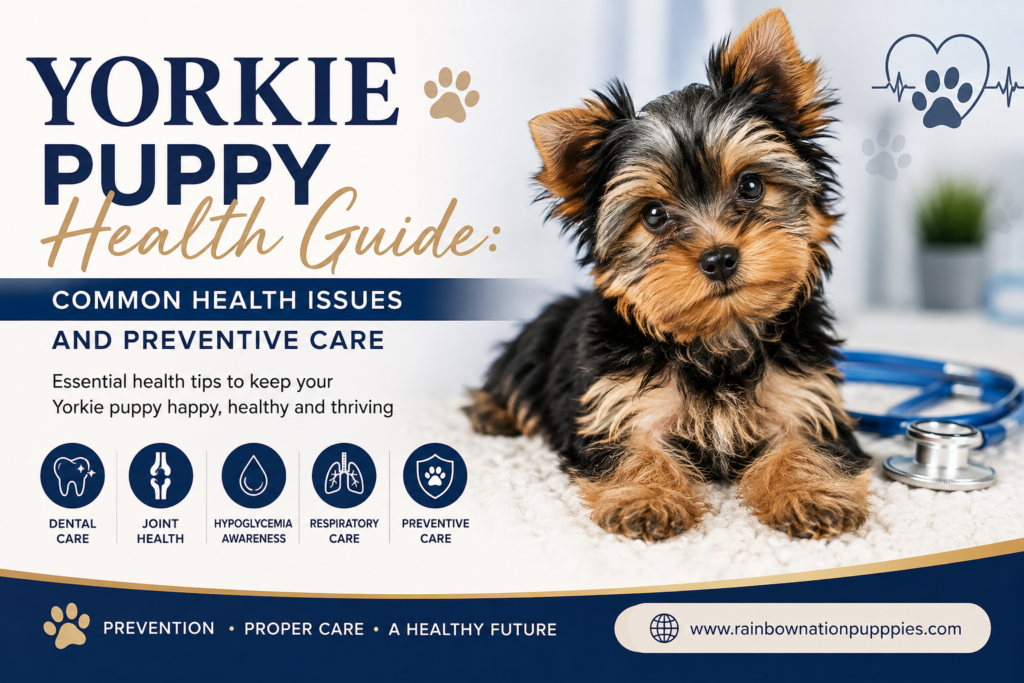
Yorkshire Terriers, affectionately known as Yorkies, are small dogs with big personalities. Their intelligence, affectionate nature, and beautiful silky coats make them one of the most popular toy breeds for families and individuals. However, their small size also means that Yorkie puppies require attentive health care, proper nutrition, routine veterinary examinations, and early preventive measures.
Whether you are preparing to welcome a Yorkie puppy into your home or already have one, understanding common Yorkshire Terrier health problems can help you recognize warning signs early and provide better lifelong care.
If you are researching healthy Yorkie puppies, you can also explore available Yorkie puppies here and use this guide as a foundation for understanding the breed’s healthcare needs.
Important: This article provides general educational information and should not replace advice from a qualified veterinarian. If your puppy develops concerning symptoms, seek professional veterinary care promptly.
Understanding Yorkie Puppy Health
Yorkshire Terriers are generally considered a healthy breed, but responsible ownership requires awareness of conditions that can occur more frequently in Yorkies and other toy breeds.
The Yorkshire Terrier Club of America identifies conditions including patellar luxation, Legg-Calvé-Perthes disease, portosystemic shunts, and protein-losing enteropathy among health concerns that can occur in the breed.
Veterinary references also identify concerns such as dental disease, hypoglycemia, tracheal collapse, liver abnormalities, heart disease, and certain eye conditions.
The good news is that many aspects of Yorkie health can be improved through preventive veterinary care, appropriate nutrition, dental hygiene, parasite control, vaccinations, safe exercise, and responsible breeding practices.
1. Dental Disease
Dental problems are among the most important health concerns for Yorkies.
Because Yorkies have small mouths and relatively crowded teeth, plaque and tartar can accumulate quickly. Without appropriate dental care, this may progress to gum inflammation, periodontal disease, tooth loss, pain, and other complications.
VCA specifically identifies Yorkshire Terriers as being particularly prone to dental disease and emphasizes the importance of daily dental care.
Signs of dental problems
Watch for:
- Persistent bad breath
- Red or swollen gums
- Yellow or brown tartar
- Difficulty chewing
- Dropping food
- Excessive drooling
- Loose or missing teeth
- Reluctance to eat
- Pawing at the mouth
Preventive dental care
Start dental care while your Yorkie is still a puppy. Gradually introduce a dog-specific toothbrush and toothpaste, making the experience positive and stress-free.
Daily brushing is ideal. Regular veterinary dental examinations are also important because brushing alone may not remove existing dental disease.
The AKC recommends incorporating routine dental care into Yorkie grooming and health maintenance.
2. Patellar Luxation
Patellar luxation occurs when the kneecap moves out of its normal position. It is a recognized concern in Yorkshire Terriers and other small breeds.
A Yorkie with a luxating patella may occasionally skip, hop, or briefly hold up one hind leg before returning to normal movement.
Possible warning signs
- Intermittent limping
- Skipping while walking
- Difficulty climbing stairs
- Reluctance to jump
- Hind-leg stiffness
- Abnormal gait
The condition varies in severity. Some dogs experience mild episodes, while others may eventually require surgical treatment.
The AKC lists patella evaluation among the recommended health tests for Yorkshire Terriers.
How owners can help
Avoid encouraging excessive jumping from furniture, particularly during puppyhood. Maintain an appropriate body weight and provide controlled exercise rather than repetitive high-impact activity.
3. Hypoglycemia in Yorkie Puppies
Low blood sugar, or hypoglycemia, deserves particular attention in very small Yorkie puppies.
Toy-breed puppies have relatively small energy reserves, and inadequate food intake, stress, illness, or excessive activity can contribute to dangerously low blood glucose.
VCA identifies hypoglycemia as an important health consideration for Yorkshire Terrier puppies.
Symptoms may include:
- Weakness
- Extreme tiredness
- Shaking
- Disorientation
- Unusual sleepiness
- Difficulty standing
- Collapse
- Seizures in severe cases
A puppy showing severe weakness, collapse, seizures, or altered consciousness requires urgent veterinary attention.
Young Yorkies should receive an appropriate, nutritionally complete diet according to their veterinarian’s recommendations. Avoid making major feeding changes without professional guidance.
4. Tracheal Collapse and Respiratory Problems
The trachea, or windpipe, is supported by cartilage rings. In some dogs, these structures can weaken, contributing to tracheal collapse.
Yorkshire Terriers are among the breeds in which airway problems may occur. VCA lists tracheal collapse as a breed health consideration.
Signs to watch for
- Persistent coughing
- A harsh or “honking” cough
- Difficulty breathing
- Reduced exercise tolerance
- Breathing that becomes worse with excitement
- Respiratory distress
Using a properly fitted harness rather than putting pressure on the neck may be preferable for many Yorkies, particularly those prone to coughing or airway irritation.
Any significant breathing difficulty should be treated as a veterinary concern.
5. Portosystemic Shunt and Liver Problems
Yorkshire Terriers can be affected by congenital liver conditions such as portosystemic shunts.
A portosystemic shunt is an abnormal blood vessel that allows some blood to bypass the liver. Because the liver plays an important role in processing nutrients and removing toxins, abnormalities can affect a puppy’s growth and overall health.
Possible signs can include:
- Poor growth
- Reduced appetite
- Vomiting
- Diarrhea
- Excessive drinking or urination
- Neurological abnormalities
- Unusual behavior after eating
VCA identifies portosystemic shunt among Yorkshire Terrier health considerations.
Early veterinary assessment is important when a puppy is failing to thrive or displaying unusual neurological or digestive symptoms.
6. Legg-Calvé-Perthes Disease
Legg-Calvé-Perthes disease affects the hip joint and involves degeneration of the femoral head. It can cause pain, lameness, and reduced use of a hind leg.
The Yorkshire Terrier Club of America includes Legg-Calvé-Perthes disease among conditions that can occur in the breed.
If your puppy develops persistent limping or appears painful when walking, running, or being handled, schedule a veterinary examination.
Early diagnosis allows your veterinarian to determine the appropriate treatment strategy.
7. Eye Problems
Yorkies can experience various eye conditions, and responsible breeding programs should pay attention to ocular health.
The AKC’s Yorkshire Terrier health-testing recommendations include an ophthalmologist evaluation.
Potential warning signs include:
- Excessive tearing
- Redness
- Squinting
- Cloudiness
- Eye discharge
- Pawing at the eyes
- Changes in vision
Regularly inspect your puppy’s eyes and seek veterinary care if you notice sudden or persistent changes.
Keeping facial hair appropriately groomed can also help prevent hair from irritating the eyes.
8. Skin and Coat Problems
The Yorkshire Terrier’s long, fine coat is beautiful but requires consistent maintenance.
Mats and tangles can trap moisture and debris close to the skin, potentially contributing to irritation and discomfort.
Regular brushing allows owners to identify problems such as:
- Fleas or ticks
- Redness
- Dry skin
- Lumps
- Bald patches
- Skin infections
- Parasites
- Unusual odors
The AKC recommends frequent brushing for Yorkies and emphasizes checking the skin and coat for parasites or other abnormalities during grooming.
A regular grooming routine should include brushing, bathing when appropriate, nail care, ear checks, and dental care.
Preventive Care for Yorkie Puppies
Preventive healthcare is much more than treating illness after symptoms appear. It involves establishing healthy habits from the beginning.
1. Schedule an Initial Veterinary Examination
Arrange a veterinary examination soon after bringing your puppy home.
A wellness visit allows your veterinarian to evaluate:
- General physical condition
- Heart and lungs
- Teeth and mouth
- Eyes and ears
- Weight and growth
- Parasites
- Vaccination status
- Diet
- Development
The AKC recommends veterinary evaluation for newly acquired puppies and regular wellness examinations throughout a dog’s life.
2. Keep Vaccinations Up to Date
Vaccination is one of the most important forms of preventive healthcare.
Depending on your location and your puppy’s lifestyle, your veterinarian may recommend vaccinations against diseases such as:
- Canine parvovirus
- Canine distemper
- Rabies
- Adenovirus
- Leptospirosis
- Bordetella
- Other locally relevant diseases
Vaccination schedules vary, so your veterinarian should determine the appropriate timing for your Yorkie.
Many serious infectious diseases are preventable through appropriate vaccination.
3. Follow a Parasite-Control Program
Puppies can be affected by intestinal parasites, fleas, ticks, and other parasites.
Your veterinarian can recommend an appropriate parasite-control program based on your puppy’s age, weight, environment, and local disease risks.
Regular fecal examinations may also be recommended, especially during puppyhood.
Never give a puppy a parasite-control product without confirming that it is appropriate for the puppy’s age and weight.
4. Feed a Balanced, Puppy-Appropriate Diet
Nutrition plays a major role in healthy development.
Yorkie puppies need a complete and balanced diet formulated for their growth stage. Because they are a toy breed, portion sizes and feeding schedules should be carefully managed.
Avoid excessive treats and table scraps. Overfeeding can contribute to unhealthy weight gain, while inadequate nutrition can interfere with growth and development.
Your veterinarian can help determine an appropriate feeding plan based on your puppy’s size, age, activity level, and condition.
5. Maintain a Healthy Weight
Keeping your Yorkie at a healthy body condition can reduce unnecessary stress on the joints and other body systems.
Obesity can increase the risk of injury and contribute to metabolic and cardiovascular problems.
Instead of judging your puppy’s weight by appearance alone, ask your veterinarian to evaluate body condition during routine visits.
6. Establish a Daily Dental Routine
Dental prevention should begin early.
Start by allowing your puppy to become comfortable with having its mouth handled. Gradually introduce a toothbrush and veterinarian-approved canine toothpaste.
Daily brushing can help control plaque accumulation, while professional veterinary examinations can identify dental problems that owners may miss.
Starting young makes dental care much easier as your Yorkie matures.
7. Groom Your Yorkie Regularly
Yorkie grooming is not simply about appearance. It is also an opportunity to monitor your puppy’s health.
During grooming, inspect:
- Skin
- Ears
- Eyes
- Teeth
- Nails
- Paws
- Coat
The AKC recommends regular brushing and appropriate trimming to keep a Yorkie’s coat healthy and manageable.
Choosing a Healthy Yorkie Puppy
Preventive care begins before your puppy comes home.
When considering Yorkie puppies, ask the breeder for appropriate health information, veterinary records, vaccination records, parasite-treatment history, and information about the puppy’s parents.
Responsible breeders should be willing to discuss health screening and hereditary concerns.
For Yorkshire Terriers, the AKC identifies patella evaluation and ophthalmologist evaluation as recommended breed health tests.
You can explore Yorkie puppies available here while keeping health, responsible breeding, veterinary documentation, and long-term welfare among your most important considerations.
A healthy puppy should be alert, responsive, appropriately active, and developing normally for its age. However, appearance alone cannot guarantee future health, which is why veterinary examinations and appropriate health documentation are valuable.
Yorkie Puppy Health Checklist
Use this simple checklist to stay organized:
- Schedule regular veterinary examinations.
- Follow your veterinarian’s vaccination schedule.
- Maintain appropriate parasite prevention.
- Feed a complete and balanced puppy diet.
- Monitor your puppy’s weight and growth.
- Brush your Yorkie’s teeth regularly.
- Check the mouth for retained or abnormal teeth.
- Brush and groom the coat consistently.
- Monitor the eyes and ears.
- Use safe, controlled exercise.
- Avoid excessive jumping and rough play.
- Watch for coughing or breathing difficulties.
- Learn the signs of hypoglycemia.
- Monitor changes in appetite, energy, stool, or behavior.
- Seek veterinary advice when symptoms persist or appear suddenly.
When Should You Contact a Veterinarian?
Some symptoms should never be ignored in a small puppy.
Contact your veterinarian promptly if your Yorkie experiences:
- Difficulty breathing
- Collapse
- Seizures
- Severe weakness
- Repeated vomiting
- Persistent diarrhea
- Bloody stool
- Sudden inability to walk
- Severe pain
- Significant loss of appetite
- Sudden changes in behavior
- Eye injury or sudden vision changes
Puppies can deteriorate quickly, so it is safer to seek professional advice rather than waiting for symptoms to resolve on their own.
Final Thoughts: Building a Lifetime of Yorkie Health
Caring for a Yorkie puppy is a long-term commitment, but many of the most important aspects of their health are straightforward: regular veterinary care, proper nutrition, dental hygiene, grooming, parasite prevention, vaccination, healthy exercise, and early recognition of abnormal symptoms.
Yorkshire Terriers can be wonderful companions, and proactive healthcare can help give your puppy the best opportunity for a long, active, comfortable life.
If you are looking for a Yorkie puppy, visit Rainbow Nation Puppies to explore Yorkie puppies while keeping responsible ownership and lifelong health at the center of your decision.
For more information about available Yorkie puppies, you can also view the Yorkie puppy collection here.
Remember: breed-specific health information is a starting point—not a substitute for individualized veterinary care. Your veterinarian is the best source for vaccination schedules, nutrition recommendations, parasite prevention, dental care, and treatment decisions for your particular Yorkie.
Frequently Asked Questions
Are Yorkies generally healthy dogs?
Yes. Yorkshire Terriers are generally considered a healthy breed, but they can be predisposed to certain conditions, including dental disease, patellar luxation, hypoglycemia in puppies, tracheal problems, liver abnormalities, and some eye conditions.
How often should a Yorkie puppy see a veterinarian?
Puppies generally require several veterinary visits during their first months for examinations, vaccinations, parasite management, and developmental monitoring. After puppyhood, routine wellness examinations remain important. Your veterinarian should establish the schedule appropriate for your dog.
How can I prevent dental problems in my Yorkie?
Begin dental care early, ideally brushing your Yorkie’s teeth daily with products designed for dogs, and arrange regular veterinary dental examinations.
Are Yorkies prone to low blood sugar?
Very small Yorkie puppies can be susceptible to hypoglycemia. Weakness, shaking, extreme lethargy, collapse, or seizures require urgent veterinary attention.
What health tests should Yorkie breeders consider?
The AKC lists patella evaluation and ophthalmologist evaluation among the recommended health tests for Yorkshire Terriers.