
Create a Safe Puppy Space
Before your puppy arrives, choose a quiet area in your home where the puppy can rest, sleep and adjust. This should not be a busy walkway or noisy part of the house. A calm corner of the living room, bedroom or family area can work well if it is safe and easy to supervise.
Your puppy’s safe space should include a comfortable bed or soft blanket, clean water, puppy pads if needed, and a few safe toys. The area should be warm, dry and free from dangerous items. Puppies are curious and may chew wires, shoes, plants or small objects, so remove anything unsafe before your puppy comes home.
A safe space helps your puppy understand where to relax. It also prevents the puppy from feeling overwhelmed by the entire house at once. During the first few days, allow your puppy to explore slowly and calmly.
Puppy-Proof Your Home
Puppy-proofing is one of the most important steps before bringing a puppy home. Puppies explore with their mouths, paws and noses. They may chew things, crawl under furniture, or pick up objects from the floor.
Check your home carefully and remove anything that could harm your puppy. Hide electrical cords, move cleaning products out of reach, secure rubbish bins, remove small items from the floor, and keep medicines, sharp objects and unsafe plants away. If you have stairs, consider using a baby gate until your puppy is more confident.
For small breeds and teacup puppies, safety is even more important. Tiny puppies can get injured from falls, rough handling or being stepped on. Make sure children understand that the puppy must be handled gently and never chased, dropped or squeezed.
Prepare the Essential Puppy Supplies
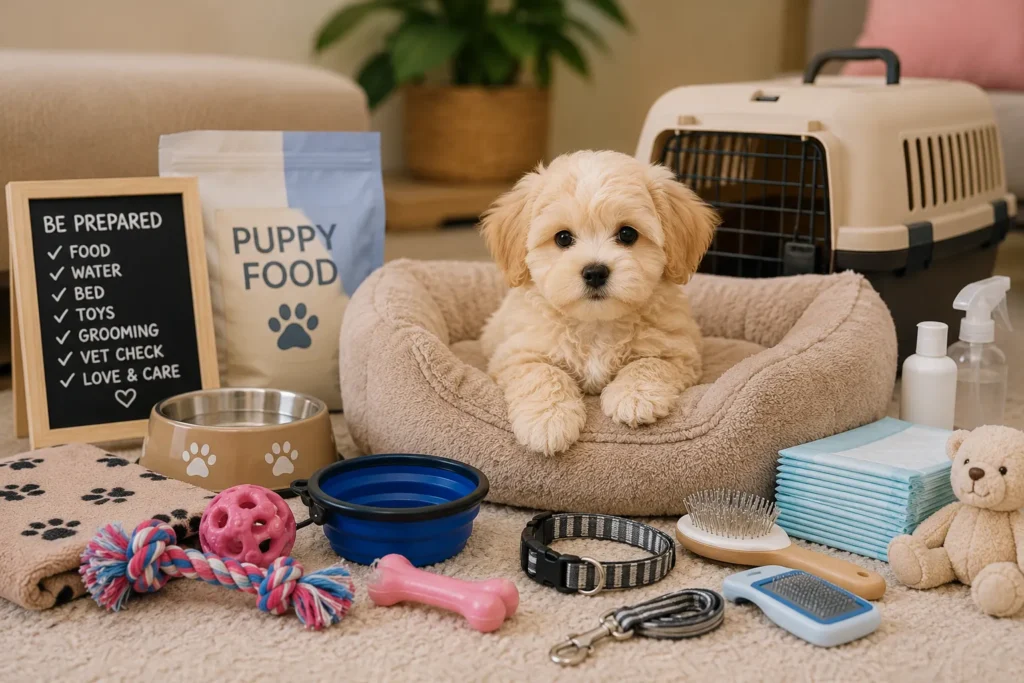
Having the right supplies ready before your puppy arrives makes the first week much easier. You do not need to buy everything in the pet store, but you should have the basics prepared.
Important puppy supplies include:
Food and water bowls
Recommended puppy food
Comfortable bed or blanket
Puppy pads or toilet training supplies
Safe chew toys
Gentle grooming brush
Puppy shampoo if needed
Collar or harness
Lead for safe outdoor introduction
Cleaning supplies for accidents
A carrier for travel
Vet contact details
Ask the breeder what food the puppy is currently eating. Sudden food changes can upset a puppy’s stomach, so it is better to continue the same food at first and make any changes gradually with proper guidance.
Understand the Feeding Routine
Feeding is a major part of puppy care. Puppies need age-appropriate food and a regular feeding schedule. Before bringing your puppy home, ask the breeder how often the puppy eats, what food is being used, and what portion guidance they recommend.
Do not suddenly change the puppy’s food on the first day. Your puppy is already adjusting to a new environment, new people and new smells. Keeping the same food helps reduce stress and digestive upset. If you want to change food later, do it gradually over several days.
Always provide clean water. Make sure the water bowl is shallow enough for a small puppy to use safely. For teacup puppies, feeding routine and careful observation are especially important because very small puppies can be more delicate.
Plan the First Night
The first night can be emotional for a puppy. Your puppy may miss familiar surroundings and may cry or feel unsettled. This is normal. Prepare a comfortable sleeping area and keep the environment calm.
Avoid placing the puppy alone in a cold or faraway area on the first night. The puppy should feel safe, but you should still begin building a healthy routine. Soft bedding, a quiet space and gentle reassurance can help.
Do not overwhelm the puppy with too much attention at bedtime. Keep the routine simple and calm. Over time, your puppy will learn when it is time to sleep and where to rest.
Prepare Children for the Puppy
If you have children, prepare them before the puppy arrives. Children are often very excited, but puppies need gentle handling. Explain that the puppy is small, sensitive and still learning.
Teach children to sit down when holding the puppy, use soft hands, avoid loud shouting, and never pull ears, tail or fur. Children should not wake the puppy while sleeping or chase the puppy around the house.
Supervision is important, especially with small breeds like Maltese, Yorkies, Toy Poodles and Teacup puppies. A calm introduction helps build trust between the puppy and the children.
Arrange a Vet Check
A new puppy should have veterinary care after arriving home. Ask the breeder about vaccinations, deworming, health checks and any available records. Then arrange a visit with your local veterinarian for continued care.
Your vet can guide you on vaccination schedules, parasite control, feeding, growth, dental care, and general health. Even if your puppy appears healthy, a wellness check gives you peace of mind and helps you continue responsible care.
Keep all health records in one place. This makes it easier to follow future vaccination and deworming schedules.
Start Toilet Training Early
Toilet training takes patience. Puppies do not understand your home rules immediately. Before your puppy arrives, decide where you want toilet training to happen. Some families use puppy pads first, while others begin outdoor toilet training when safe and age-appropriate.
Take your puppy to the toilet area after waking up, after eating, after playing and before bedtime. Praise calm success and avoid harsh punishment for accidents. Accidents are part of the learning process.
Clean accidents properly with pet-safe cleaning products. If the smell remains, the puppy may return to the same spot. Consistency is the key to toilet training.
Keep the First Week Calm
Many families want to invite relatives and friends immediately after bringing a puppy home. It is better to keep the first week calm. Your puppy needs time to adjust to the new home, routine and family.
Too many visitors, loud noise or constant handling can stress a puppy. Allow the puppy to rest often. Puppies need a lot of sleep, especially during growth.
Keep play sessions short and gentle. Give your puppy time to explore, sleep and bond with the family. A calm first week builds confidence.
Begin Gentle Training
Training should begin early, but it should be gentle and age-appropriate. Start with simple routines such as responding to name, coming when called, learning where to sleep, and understanding basic boundaries.
Use positive encouragement, patience and consistency. Puppies learn best when they feel safe. Avoid shouting, punishment or rough correction. A puppy that trusts the family will learn more confidently.
Short training moments throughout the day are better than long sessions. Keep training fun and calm.
Grooming Preparation
Grooming needs depend on the breed. Maltese, Yorkies and Poodles often need regular brushing and grooming. Beagles usually need less coat maintenance but still need cleaning, nail care and ear checks.
Before your puppy arrives, get a gentle brush suitable for the coat type. Start grooming slowly so the puppy becomes comfortable with being touched. Handle paws, ears and coat gently for short periods.
Regular grooming helps prevent knots, discomfort and hygiene problems. It also helps your puppy become used to care routines from an early age.
Prepare for Safe Travel or Delivery
If your puppy is being delivered or collected, make sure travel is safe and comfortable. A puppy should not travel in unsafe conditions. Use a secure carrier or safe travel setup. Keep the journey calm, avoid overheating, and prepare water and bedding if needed.
When the puppy arrives, allow them to settle quietly. Do not immediately overwhelm the puppy with noise or too many people. Let the puppy explore slowly and rest.
Understand Breed Needs
Different puppies have different needs. Maltese puppies may enjoy calm companionship and regular grooming. Yorkies may be small but confident and alert. Toy Poodles are smart and enjoy training. Teacup puppies need extra careful handling. Beagle puppies are playful and may need more activity and mental stimulation.
Understanding your puppy’s breed helps you prepare properly. Ask the breeder about expected temperament, grooming, size, energy level and care needs.
Keep Communication With the Breeder
A responsible breeder can provide helpful information about feeding, routine, personality, care and adjustment. Keep communication open, especially during the first few days. If you are unsure about food, sleeping, toilet training or settling in, ask for guidance.
Good communication helps prevent confusion and supports a better transition for the puppy.
Final Thoughts
Preparing for a new puppy is about more than buying supplies. It is about creating a safe, calm and loving environment where your puppy can grow with confidence. Before bringing your puppy home, prepare a safe space, gather essential supplies, understand feeding, plan the first night, arrange veterinary care, and teach your family how to handle the puppy gently.
A well-prepared home makes the puppy’s arrival smoother and helps the family feel more confident. Whether you are welcoming a Maltese, Yorkie, Toy Poodle, Teacup puppy or Beagle, the first days should focus on safety, patience, routine and love.
Rainbow Nation Pups supports families with clear guidance, thoughtful communication and care-focused preparation so every puppy can begin life in their new home with comfort and confidence.