
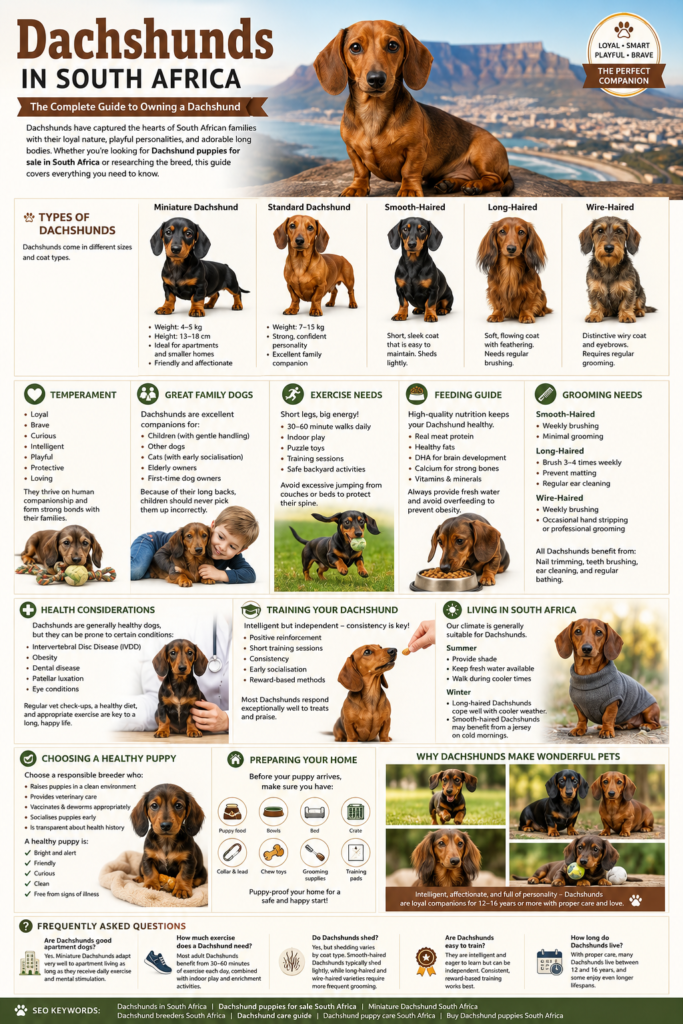
Dachshunds have become one of the most popular dog breeds in South Africa, loved for their loyal personalities, distinctive long bodies, and playful nature. Whether you’re searching for Dachshund puppies for sale in South Africa, researching the breed before buying, or simply learning more about these charming dogs, this guide covers everything you need to know.
Why Dachshunds Are So Popular in South Africa
Originally bred in Germany to hunt badgers, Dachshunds have evolved into exceptional family companions. Their intelligence, courage, and affectionate temperament make them ideal pets for singles, couples, families, and retirees alike.
South African families particularly appreciate Dachshunds because they:
- Adapt well to both houses and apartments
- Form strong bonds with their owners
- Are highly intelligent and trainable
- Have moderate exercise requirements
- Make excellent watchdogs
- Live long, healthy lives with proper care
Whether you live in Johannesburg, Cape Town, Durban, Pretoria, or anywhere else in South Africa, a Dachshund can fit comfortably into your lifestyle.
Types of Dachshunds
There are several varieties of Dachshunds available in South Africa.


6
Miniature Dachshund
The Miniature Dachshund is the most sought-after variety in South Africa.
- Weight: 4–5 kg
- Height: 13–18 cm
- Ideal for apartments and smaller homes
- Friendly and affectionate
Standard Dachshund
The Standard Dachshund is larger and originally bred for hunting.
- Weight: 7–15 kg
- Strong, confident personality
- Excellent family companion
Coat Types
Dachshunds come in three coat varieties:
- Smooth-haired
- Long-haired
- Wire-haired
Each has unique grooming needs but shares the same lovable personality.
Dachshund Temperament
Dachshunds may be small, but they have enormous personalities.
Typical traits include:
- Loyal
- Brave
- Curious
- Intelligent
- Playful
- Protective
- Loving
They enjoy spending time with their family and dislike being left alone for long periods.
Early socialisation helps them become confident around children, strangers, and other pets.
Are Dachshunds Good Family Dogs?
Absolutely.
Dachshunds are excellent companions for families that understand their energetic and independent nature.
They are generally good with:
- Children who know how to handle dogs gently
- Other dogs
- Cats (if introduced early)
- Elderly owners
- First-time dog owners willing to invest in training
Because of their long backs, children should never pick them up incorrectly.
Exercise Requirements
Although they have short legs, Dachshunds are energetic dogs.
Daily exercise should include:
- 30–60 minute walks
- Indoor play
- Puzzle toys
- Training sessions
- Safe backyard activities
Avoid excessive jumping from couches or beds, as this can increase the risk of spinal injuries.
Feeding Your Dachshund
Nutrition plays a major role in maintaining a healthy weight and preventing back problems.
Choose high-quality puppy food that contains:
- Real meat protein
- Healthy fats
- DHA for brain development
- Calcium for strong bones
- Vitamins and minerals
Fresh water should always be available.
Avoid overfeeding, as obesity significantly increases the risk of back problems.
Grooming Needs
Smooth-Haired Dachshunds
- Weekly brushing
- Minimal grooming
Long-Haired Dachshunds
- Brush 3–4 times weekly
- Prevent matting
- Regular ear cleaning
Wire-Haired Dachshunds
- Weekly brushing
- Occasional hand stripping or professional grooming
All Dachshunds benefit from:
- Nail trimming
- Teeth brushing
- Ear cleaning
- Regular bathing when necessary
Common Health Considerations
Like all breeds, Dachshunds have some inherited health risks.
Responsible breeders help reduce these risks through careful breeding and proper veterinary care.
Potential concerns include:
- Intervertebral Disc Disease (IVDD)
- Obesity
- Dental disease
- Patellar luxation
- Eye conditions
Routine veterinary check-ups, a healthy diet, and appropriate exercise contribute to a long, happy life.
Training a Dachshund
Dachshunds are highly intelligent but can also be stubborn.
Successful training includes:
- Positive reinforcement
- Short sessions
- Consistency
- Early socialisation
- Reward-based methods
Most Dachshunds respond exceptionally well to treats and praise.
Living With a Dachshund in South Africa
South Africa’s climate is generally suitable for Dachshunds.
During summer:
- Provide shade
- Keep fresh water available
- Walk during cooler mornings or evenings
During winter:
- Long-haired Dachshunds cope well with cooler weather.
- Smooth-haired Dachshunds may benefit from a lightweight dog jersey during cold mornings.
Choosing a Healthy Dachshund Puppy
When looking for Dachshund puppies for sale in South Africa, choose a breeder who:
- Raises puppies in a clean environment
- Provides veterinary care
- Vaccinates puppies appropriately
- Deworms regularly
- Socialises puppies from an early age
- Is transparent about the puppy’s health history
A healthy puppy should be:
- Bright and alert
- Friendly
- Curious
- Clean
- Free from signs of illness
Preparing Your Home
Before bringing your new puppy home, you’ll need:
- Puppy food
- Food and water bowls
- Comfortable bed
- Puppy crate
- Collar and lead
- Chew toys
- Grooming supplies
- Puppy training pads
Creating a safe, puppy-proof environment helps your new companion settle in quickly.
Why Dachshunds Make Wonderful Pets


7
Dachshunds combine intelligence, affection, confidence, and charm into one unforgettable breed. Their playful personalities and unwavering loyalty make them cherished companions for South African households of all sizes.
With proper nutrition, regular veterinary care, positive training, and plenty of love, a Dachshund can remain a devoted family member for 12–16 years or more.
Frequently Asked Questions
Are Dachshunds good apartment dogs?
Yes. Miniature Dachshunds adapt very well to apartment living as long as they receive daily exercise and mental stimulation.
How much exercise does a Dachshund need?
Most adult Dachshunds benefit from 30–60 minutes of exercise each day, combined with indoor play and enrichment activities.
Do Dachshunds shed?
Yes, but shedding varies by coat type. Smooth-haired Dachshunds typically shed lightly, while long-haired and wire-haired varieties require more frequent grooming.
Are Dachshunds easy to train?
They are intelligent and eager to learn but can be independent. Consistent, reward-based training works best.
How long do Dachshunds live?
With proper care, many Dachshunds live between 12 and 16 years, and some enjoy even longer lifespans.